Getting Started
What to Expect at Your First Speech Therapy Session
January 2026 · 5 min read
You've made the call and scheduled your child's first speech therapy session. Now what? If you're feeling a mix of relief and nerves, that's completely normal. Here's a look at what actually happens during that first appointment—and how you can help your child (and yourself) feel prepared.

It Starts with Conversation
Before I ever work directly with your child, I want to hear from you. You know your child better than anyone, and your observations are invaluable. We'll talk about what prompted you to seek help, your child's developmental history, and what communication looks like in your daily life.
This isn't a test you need to prepare for. There are no wrong answers. I just want to understand your child's unique story and what concerns are on your mind.
Play Is the Main Event
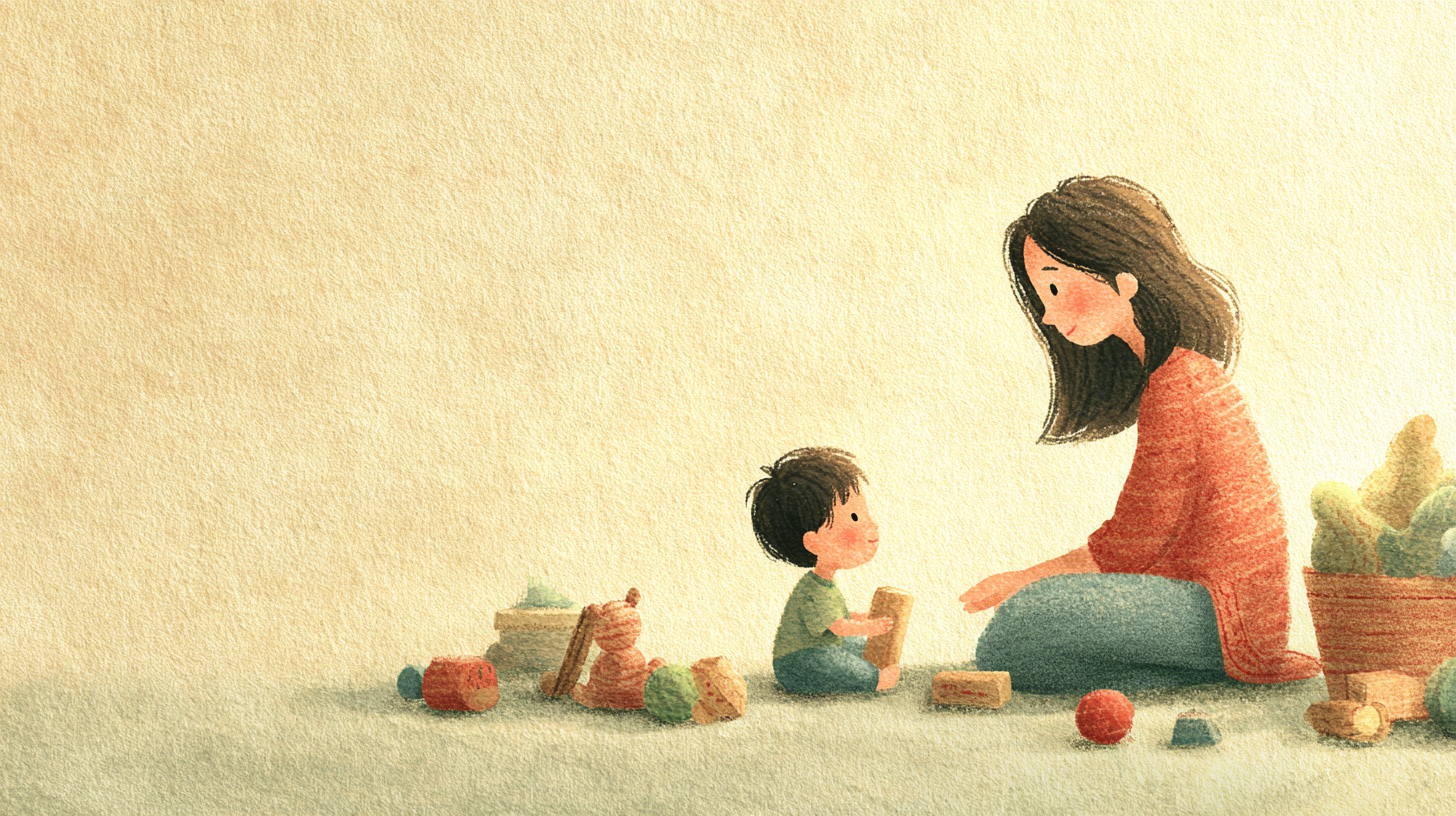
For kids, speech therapy doesn't look like sitting at a desk doing drills. Especially in that first session, my goal is to make your child feel comfortable and safe. That means getting down on the floor, pulling out toys, and following their lead.
While we play, I'm observing how your child communicates—the words they use (or don't), how they interact, how they respond to language, and what sounds they're making. It might look like we're just having fun, but I'm gathering important information the whole time.
Your Child Sets the Pace
Some kids warm up quickly. Others need more time—and that's okay. If your child is shy, clingy, or needs you close by, we work with that. There's no pressure to perform. The first session is about building trust, not pushing limits.
I've worked with kids who spend the entire first session on their parent's lap, peeking at toys from a distance. By the second or third visit, they're leading the play. Every child is different, and I meet them where they are.
Home-Based Means Comfortable
One of the biggest advantages of home-based therapy is that your child is already in a familiar space. There's no sterile clinic waiting room, no unfamiliar smells, no fluorescent lights. Your child can show me their favorite toys, their room, their world.
This comfort translates to better sessions. Kids who feel safe are more willing to try new things, take risks, and engage. And I get to see how communication happens in your actual daily environment—which helps me give you more practical strategies.
We'll Talk About What I See
At the end of the session (or sometimes in a follow-up call), I'll share my initial observations. This isn't a formal diagnosis—that comes after a full evaluation—but I can usually give you a sense of what I'm noticing and whether speech therapy seems like a good fit.
I'll also answer any questions you have. No question is too small or too silly. If you've been Googling at 2 AM, bring those questions. This is a judgment-free zone.
How to Prepare
Honestly? You don't need to do much. But if it helps you feel ready, here are a few simple things:
- • Keep it low-key with your child. You can say something like, "Someone is coming to play with you today!" No need to build it up or explain what speech therapy is.
- • Schedule around naps and meals. A rested, fed child is a happier child. If your toddler is typically a mess at 4 PM, let's not schedule for 4 PM.
- • Have a few favorite toys accessible. Familiar objects can help your child feel secure and give me a window into what motivates them.
- • Jot down your questions. It's easy to forget what you wanted to ask once we're in the moment.
What Happens After?
After the initial session, we'll discuss next steps together. If a full evaluation is needed, I'll walk you through what that involves. If we're ready to start regular therapy, we'll talk about goals and scheduling. And if I think your child doesn't need services right now, I'll tell you that too—along with things to watch for going forward.
There's no hard sell here. My job is to figure out what's best for your child, even if that means telling you they don't need me.
The Bottom Line
The first session is really about getting to know each other. It's low-pressure, play-based, and designed to make your child feel comfortable. Most parents tell me afterward that it was much easier than they expected—and their kids often ask when I'm coming back.
If you've been putting off that first appointment because you're not sure what to expect, I hope this helps. Taking that first step is the hardest part. Everything after that gets easier.

Molly Kolarik, CCC-SLP
Pediatric Speech-Language Pathologist serving the Kansas City area

Want more tips like this?
Get helpful speech therapy insights delivered to your inbox.